
Travel Vaccinations for India: A Complete Guide
August 4, 2026
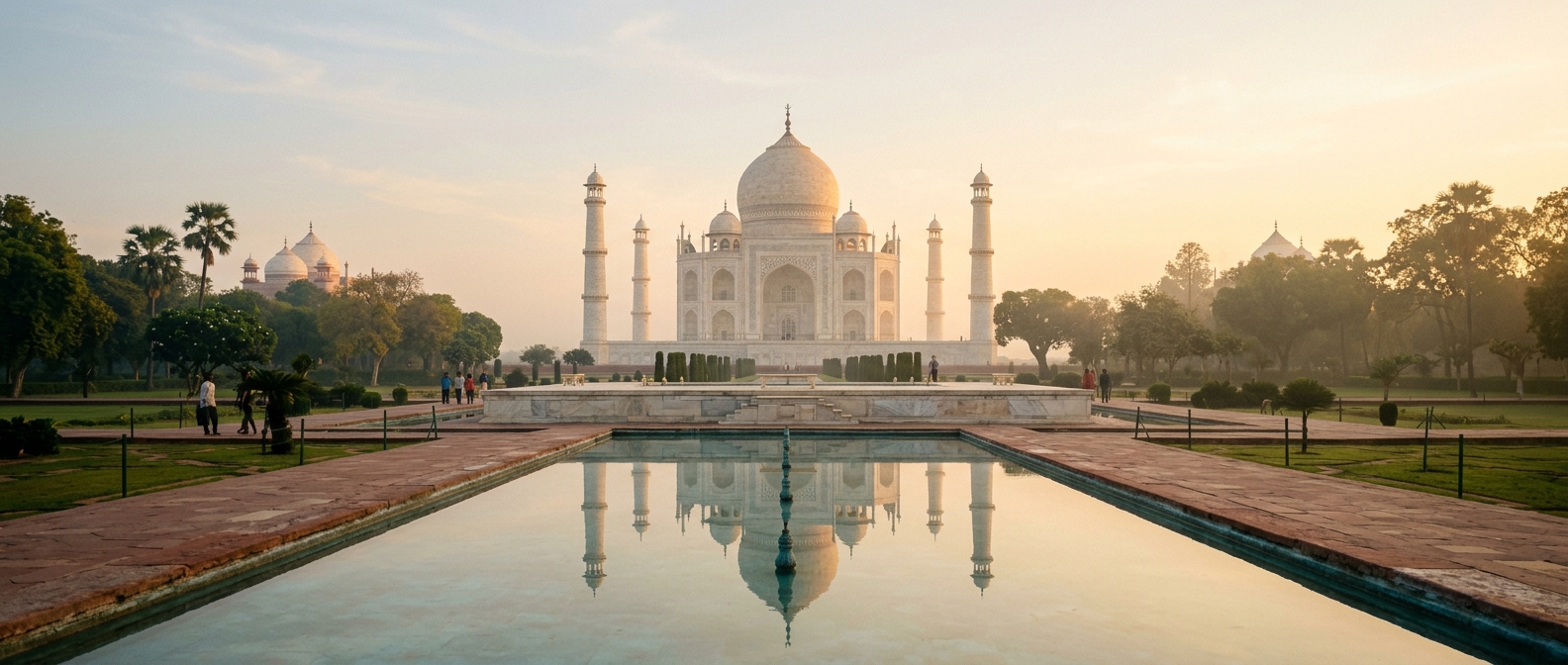
India rewards travellers like almost nowhere else, whether you’re visiting family, touring Rajasthan, heading to Goa or trekking in the Himalayan foothills. It’s also a destination where health preparation earns its keep, and where the right advice depends heavily on which part of the country you’re going to. Blanket advice about “India” is close to useless, because the risks in a Delhi hotel and a village in Assam are not the same thing.
This guide covers what we recommend at our West Ealing clinic, why the answers change by region, and what to bring to your appointment so we can be specific rather than general.
The short version
- Hepatitis A, typhoid and a tetanus booster cover most itineraries.
- Rabies deserves real consideration. India has the world’s highest burden.
- Malaria advice varies by state, so bring your full route, not just your destination.
- Visiting family doesn’t reduce your risk, and this group is often under-vaccinated.
- Dengue is widespread including in cities, and there’s now a vaccine for it.
The vaccinations we recommend for almost every trip to India
Three vaccinations come up in nearly every India consultation we run, whatever the itinerary looks like.
Hepatitis A is the one we’d least like anyone to travel without. It spreads through contaminated food and water, and the exposure isn’t limited to street food or budget accommodation, because it follows the food supply chain rather than the price of your hotel. A single first dose gives short-term cover for your trip, and a second dose taken later extends protection for years. At our clinic hepatitis A is £45 per dose.
Typhoid matters more in India than in most destinations, because India accounts for a large share of the world’s cases and drug-resistant strains circulate there. The injectable vaccine is a single dose at £30, giving protection within one to two weeks that lasts around three years.
Tetanus, diphtheria and polio come as one combined booster at £30 if your last dose was more than ten years ago. This one is worth taking seriously for a practical reason rather than an exotic one. Road traffic accidents, not tropical disease, are the leading cause of death among otherwise healthy UK travellers abroad, and India has high accident rates. Tetanus protection is about wounds, and wounds are the everyday risk.
Hepatitis A, typhoid and a tetanus booster are the baseline for a first trip to India. Everything after that depends on where you’re going, how long for, and what you’ll be doing when you get there.
Check availability and book your India consultation, or call us on 0208 567 0982 if you’d rather talk it through first.
Vaccinations that depend on where you’re going and what you’ll do
Beyond the baseline, the picture opens out. These are the ones we discuss based on your itinerary rather than recommending automatically.
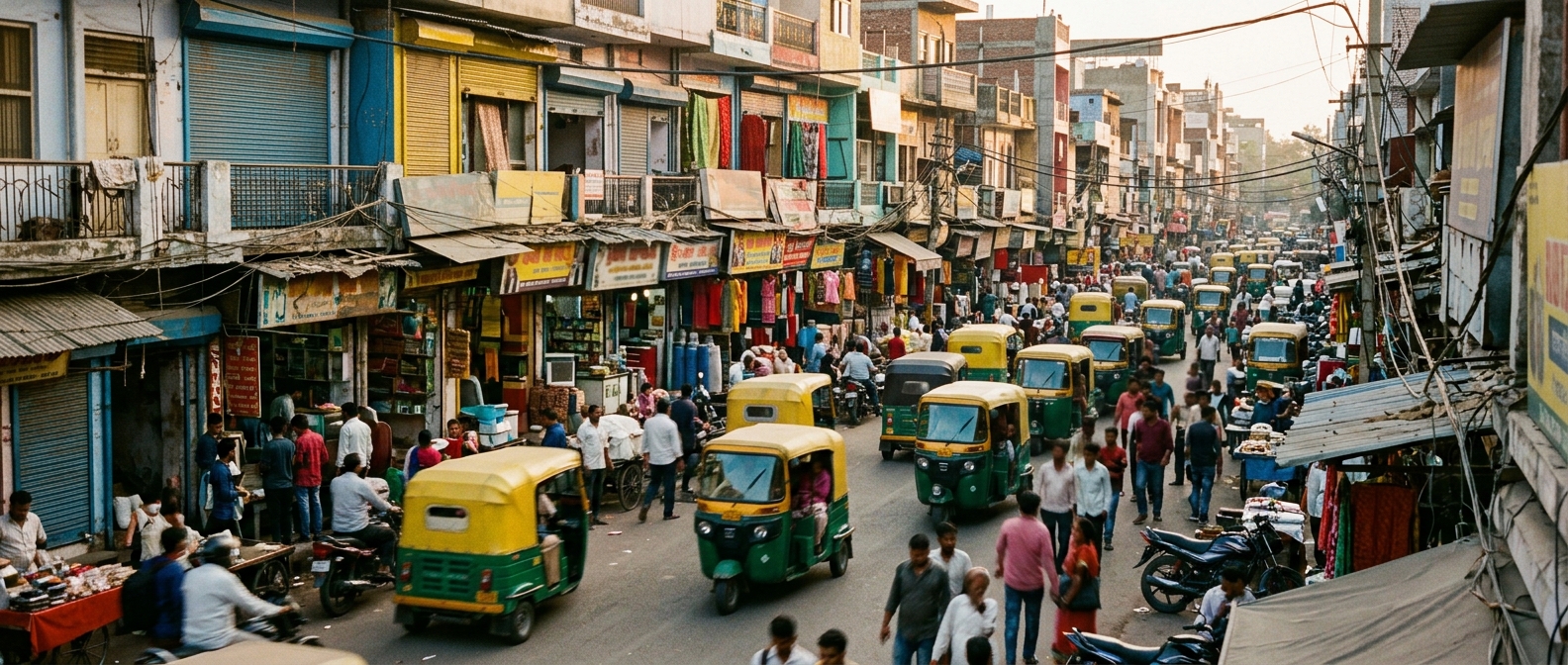
Rabies is the one travellers skip most often and the one that changes the most if something goes wrong. India records roughly 20,000 human rabies deaths a year, the highest figure anywhere, and the risk isn’t confined to remote areas. Street dogs are present across Indian cities, and monkeys at temples and ghats in places like Varanasi, Jaipur and Rishikesh are a recognised bite risk. In November 2025 the CDC reported the death of a traveller who acquired rabies in India.
The reason we push this one is what happens after a bite. Vaccination before you travel widens the window for treatment and removes the need for rabies immunoglobulin, which is frequently unavailable in India and difficult to obtain at short notice. The pre-exposure course at our clinic is two doses at £90 each, £180 in total. Our guide to who needs the rabies vaccine goes through the decision in more detail.
Hepatitis B is worth considering for longer stays, for anyone who might need medical or dental treatment while away, and for repeat travellers. It’s £40 per dose, with a three-dose course at £120, and there’s an accelerated schedule if you’re short of time.
Japanese encephalitis is mosquito-borne and concentrated in rural agricultural areas, particularly eastern India including West Bengal, Assam and Bihar, parts of Uttar Pradesh around Varanasi, and rural areas of Andhra Pradesh, Tamil Nadu and Karnataka. Risk rises during and after the monsoon. If you’re visiting cities only, it usually isn’t needed. If you’re spending time in rural areas in those regions, it moves up the list. We stock it at £110 per dose, with the two-dose course at £220, and there’s an accelerated schedule over seven days when travel is close.
Cholera is relevant to a minority: long-stay travellers, those working in areas with limited sanitation, and anyone travelling during an active outbreak. It’s £45 per dose and £90 for the two-dose course.
Meningitis ACWY comes up for pilgrimage travellers and anyone heading to large gatherings, where close-contact crowds raise the risk. It’s a single dose at £45.
Japanese encephalitis is a good example of why itinerary beats destination. Delhi, Mumbai and Goa rarely call for it. Two weeks in rural Assam during the monsoon is a different conversation.
Visiting family in India: familiarity isn’t protection
A large share of the people we see about India are travelling to stay with relatives rather than in hotels, which is unsurprising given where we are. It’s also the group we most want to talk to, because the evidence on this is consistent and counter-intuitive.
Travellers visiting friends and relatives experience a disproportionate share of travel-related typhoid, hepatitis A and malaria. The reasons are practical rather than mysterious. Stays tend to be longer. Accommodation is a family home rather than an air-conditioned hotel, often without mosquito nets. Food and water come from the household rather than a commercial kitchen, which means well water, home preparation and raw vegetables. Trips include rural areas that no tourist itinerary would reach.
Alongside that sits a belief we hear often: that having grown up in India, or having made the same trip many times without falling ill, confers some protection. It doesn’t. Immunity to hepatitis A and typhoid fades after years living in the UK, and there’s no such thing as acquired resistance to malaria that survives a decade in West London. Previous trips passing without incident is good fortune rather than evidence of safety.
None of this is a lecture about a country you may know far better than we do. It’s the opposite. Because you’re going deeper into the country than most visitors, the preparation needs to be more thorough, not less. We’ve written a fuller guide on what families visiting relatives in India need to think about, including children and older relatives travelling with you.
Book your travel consultation and bring the whole family’s records if you can.
Malaria in India depends on the state, not the country
This is where most online advice falls down. It either tells you India has malaria and you need tablets, or that the tourist areas are fine. Neither is much use when you’re planning a route.
Malaria exists across India below 2,000 metres, and both major species are present, with the more dangerous P. falciparum accounting for around 60% of cases. Chloroquine resistance is widespread, so that drug has no place in current advice. What varies is how much risk a given region carries.
High-altitude destinations including Ladakh, and much of Himachal Pradesh, Sikkim and the Kashmir valley above 2,000 metres, are effectively free of transmission. The major tourist cities and the Golden Triangle route through Delhi, Agra and Jaipur are low risk, where bite avoidance is the advice rather than tablets. Goa is low risk but not zero.
Tablets are recommended for a defined set of higher-risk areas, including Assam and Odisha, specific districts of Andhra Pradesh and Madhya Pradesh, and states including Chhattisgarh, Jharkhand and Tripura, along with rural parts of West Bengal and Maharashtra away from Kolkata and Mumbai. If your route touches any of those, the answer changes.
Where tablets are advised we usually discuss atovaquone with proguanil at £2.50 per tablet, with a paediatric version at £1.20, or doxycycline at £0.45 per capsule for those who’d prefer it and aren’t prone to sun sensitivity. Which suits you depends on trip length, other medication and your own history, which is a consultation question rather than a website one. Our breakdown of which parts of India actually need malaria tablets goes region by region.
Bring your full route, including the places you’re only passing through or visiting for a weekend. A single side trip to a high-risk district changes the malaria advice for the whole trip.
Dengue is widespread, and there’s now a vaccine
Dengue is endemic across most of India, including the major cities. The mosquitoes that carry it bite during daylight hours, which catches people out, because repellent gets treated as an evening habit. Risk rises during and after the monsoon.
For years the only advice available was bite avoidance. That’s changed. Qdenga is licensed in the UK and we hold it, at £120 per dose with a two-dose course at £240. It isn’t suitable for everyone and the decision depends on your history, including whether you’ve had dengue before, so it’s assessed individually rather than offered as standard.
It’s worth raising at your appointment if you’re travelling during or shortly after the monsoon, staying for an extended period, or returning to India regularly. Our guide to dengue in India and the Qdenga vaccine covers who it suits and who it doesn’t.
What travel vaccinations for India cost
There’s no single price for “India”, because there’s no single India itinerary. A short city trip with the baseline three costs considerably less than a six-week family visit taking in rural areas, where the list is longer and some courses run to multiple doses.
The individual prices are published rather than quoted on request. Hepatitis A is £45 per dose, typhoid £30, the combined tetanus, diphtheria and polio booster £30, rabies £90 per dose with the two-dose course at £180, hepatitis B £40 per dose or £120 for the course, Japanese encephalitis £110 per dose or £220 for the two-dose course, cholera £45 per dose or £90 for the course, and meningitis ACWY £45.
What we’d rather not do is quote you a package price before we know your route, because it would either overstate what you need or leave something out. We’ve set out what a trip to India typically costs by traveller type, from a Golden Triangle tour to a full family visit, so you can see roughly where you’ll land before you book.

When to book, and what to do if you’re flying soon
Four to six weeks before departure is the comfortable window. It gives multi-dose courses room to complete and lets protection develop before you fly. If you’re travelling in the summer school holidays, which is the busiest period for family trips from this part of London, book earlier than that because appointments go quickly.
If you’re flying sooner, come in anyway. Several of the most important vaccines for India work quickly, accelerated schedules exist for hepatitis B and Japanese encephalitis, and malaria tablets can be started close to departure. A last-minute appointment is worth far more than none. Our guide on how long before travelling you should get vaccinated sets out what’s still achievable at two weeks, one week and a few days.
Book an appointment online or call 0208 567 0982.
The things that spoil more trips than any virus
Most illness in returning travellers isn’t vaccine-preventable. It’s stomach trouble, and it affects every type of traveller, including those staying with family.
Stick to sealed bottled water, including for brushing your teeth in most areas. Be wary of ice unless you know its source, and of salads, chutneys and anything that’s been sitting warm. Freshly cooked food served hot is lower risk than cold or pre-prepared dishes. In family homes the same principles apply to well water and raw vegetables, which is an awkward conversation to have with a host and worth thinking about in advance.
Carry oral rehydration salts. Ask us about a standby antibiotic, which we can discuss and advise on at your consultation. If you take regular medication, keep it in hand luggage with a copy of your prescription.
Two other things come up often enough to mention. If you’re heading to Ladakh or trekking at altitude, Leh sits at around 3,500 metres and acute mountain sickness is a real possibility, so ask us about it. And if you have asthma or another respiratory condition and you’re visiting Delhi between October and February, check air quality forecasts before you go and travel with your inhalers, because winter smog regularly exceeds safe limits.
Comprehensive travel insurance including emergency medical evacuation is not optional for India. Private hospital care in the major cities is good, but the costs without cover are significant.
Questions we’re asked most about India vaccinations
Do I need any vaccinations to enter India?
There are no general vaccination requirements for UK travellers entering India directly. A yellow fever certificate is required only if you’re arriving from a country with yellow fever transmission risk. Everything else is recommended for your health rather than demanded at the border.
I was born in India. Do I still need vaccinations?
Yes. Childhood exposure and any immunity that came with it fades after years living in the UK, and it was never complete to begin with. This group is consistently over-represented in travel-related typhoid and hepatitis A cases.
Do I need malaria tablets for Goa?
Usually not. Goa is low risk, and bite avoidance is generally the advice. It isn’t zero risk though, and if your trip combines Goa with other parts of India the answer may change, so bring the full route.
How many doses is the hepatitis A vaccine?
The standard course is two doses for long-term protection. A single first dose gives short-term cover, which is enough for the trip itself, with the second dose taken later to extend protection for years.
Can I get vaccinated if I’m flying next week?
Yes, and it’s worth doing. Typhoid and hepatitis A both offer worthwhile protection at short notice, accelerated schedules exist for some courses, and malaria tablets can be started shortly before departure.
Is it safe to travel to India while pregnant?
It needs individual assessment. India is a confirmed Zika risk country, malaria in pregnancy is serious, and live vaccines including MMR and oral typhoid are not given during pregnancy. Injectable hepatitis A and typhoid are considered safe. Speak to us and to your maternity team before booking.
My children are coming with us. What do they need?
Broadly the same list, with doses adjusted for age. Rabies deserves particular attention for children, who are more likely to approach animals and less likely to report a scratch or a lick on broken skin.
What should I bring to the appointment?
Your full itinerary including side trips and rural stops, your travel dates, and any vaccination records you have. The more specific you can be about where you’re going, the more specific our advice can be.
Planning a trip to India?
We provide the full range of travel vaccinations for India, along with region-specific malaria advice, at 30 Northfield Avenue, West Ealing.
This article is general information, not personal medical advice. Recommendations depend on your itinerary, medical history and activities, so please speak to our team for advice based on current NaTHNaC guidance.


